The words in context
The line is usually shared alone, but in the letter it sits inside an argument:
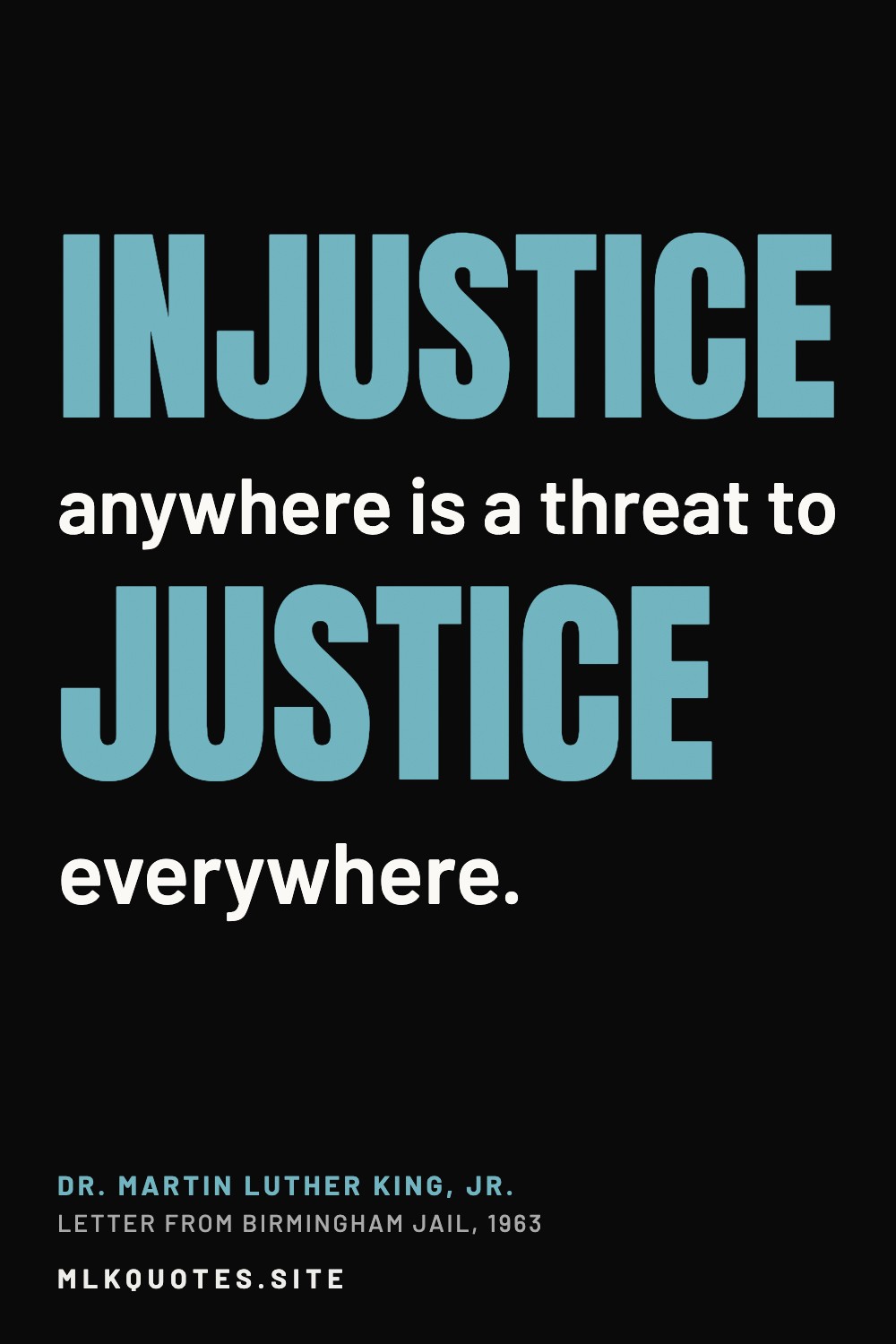
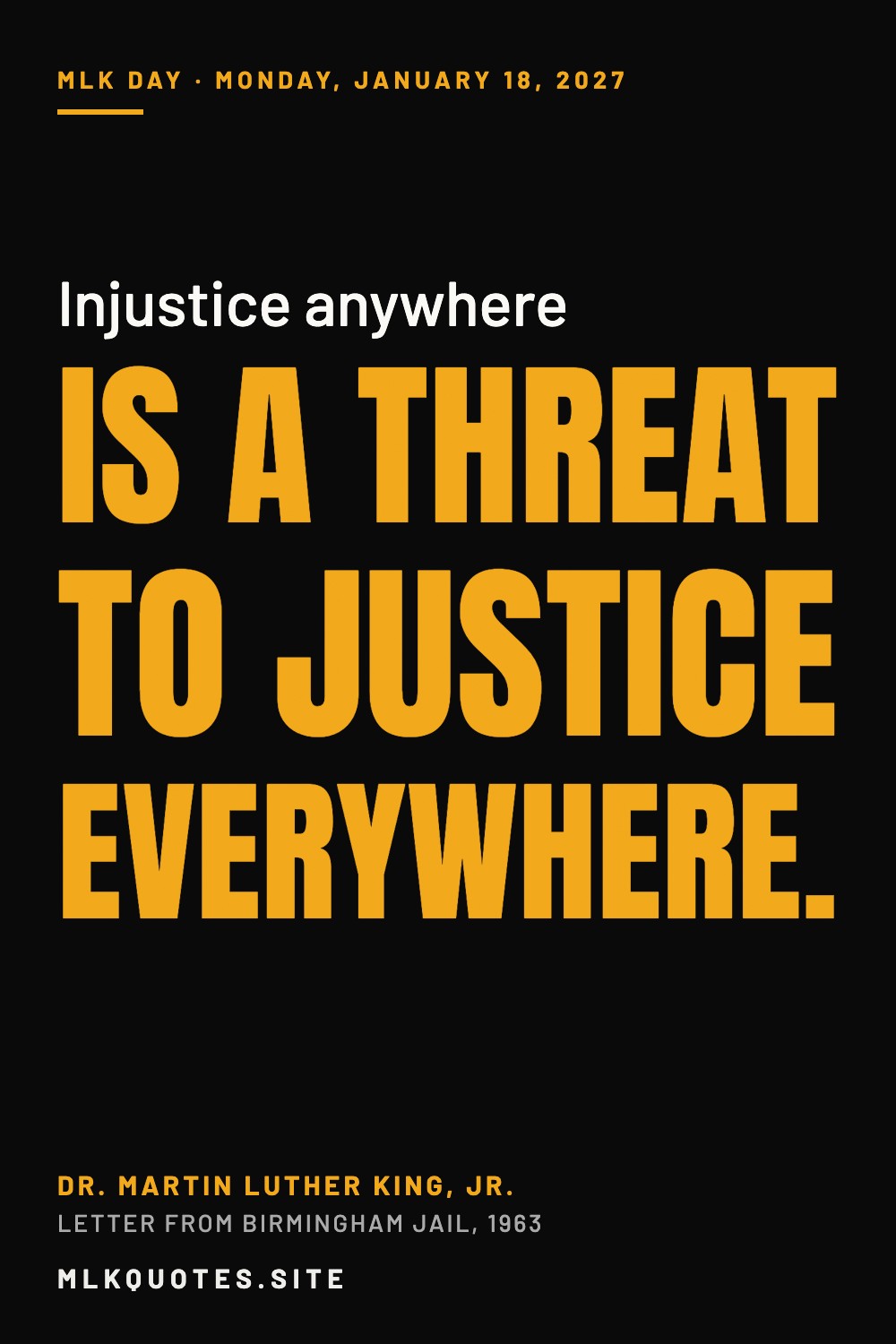
Moreover, I am cognizant of the interrelatedness of all communities and states. I cannot sit idly by in Atlanta and not be concerned about what happens in Birmingham. Injustice anywhere is a threat to justice everywhere. We are caught in an inescapable network of mutuality, tied in a single garment of destiny. Whatever affects one directly, affects all indirectly.
The sentence before it explains why he wrote it. King lived in Atlanta, and critics said he had no business in Birmingham. “Injustice anywhere” was his answer to the charge that he was an outsider.
Who he was answering
King was arrested on 12 April 1963, about a week into the Birmingham campaign. The same day, eight Birmingham clergy members published a statement in the Birmingham News calling the demonstrations “unwise and untimely” and appealing for “law and order and common sense” (King Institute). His reply, addressed to “My Dear Fellow Clergymen,” takes their objections one at a time, and the outsider charge comes first. A year later he revised the letter into a chapter of Why We Can’t Wait (1964).
What usually gets cut
Most posters stop after the first sentence. The next two are the reasoning:
- “We are caught in an inescapable network of mutuality, tied in a single garment of destiny.”
- “Whatever affects one directly, affects all indirectly.”
If you’re quoting it in an essay, include at least the second sentence.
How to cite it
- MLA: King, Martin Luther, Jr. “Letter from Birmingham Jail.” 16 Apr. 1963. African Studies Center, University of Pennsylvania.
- APA: King, M. L., Jr. (1963, April 16). Letter from Birmingham Jail. African Studies Center, University of Pennsylvania.
- Chicago: King, Martin Luther, Jr. “Letter from Birmingham Jail.” April 16, 1963. African Studies Center, University of Pennsylvania.