King’s hope was stubborn rather than cheerful. Two of his most-shared lines about it come from very different moments: “With this faith we will be able to hew out of the mountain of despair a stone of hope,” from “I Have a Dream” (1963), and “only when it is dark enough, can you see the stars,” from his last speech, in Memphis on 3 April 1968, the night before he was killed.
M10 quote images · Checked by Maddy · Updated 6 October 2026
Hope quotes
Tap an image to open it full size. Use the buttons to save it to Pinterest, share it, or download it.
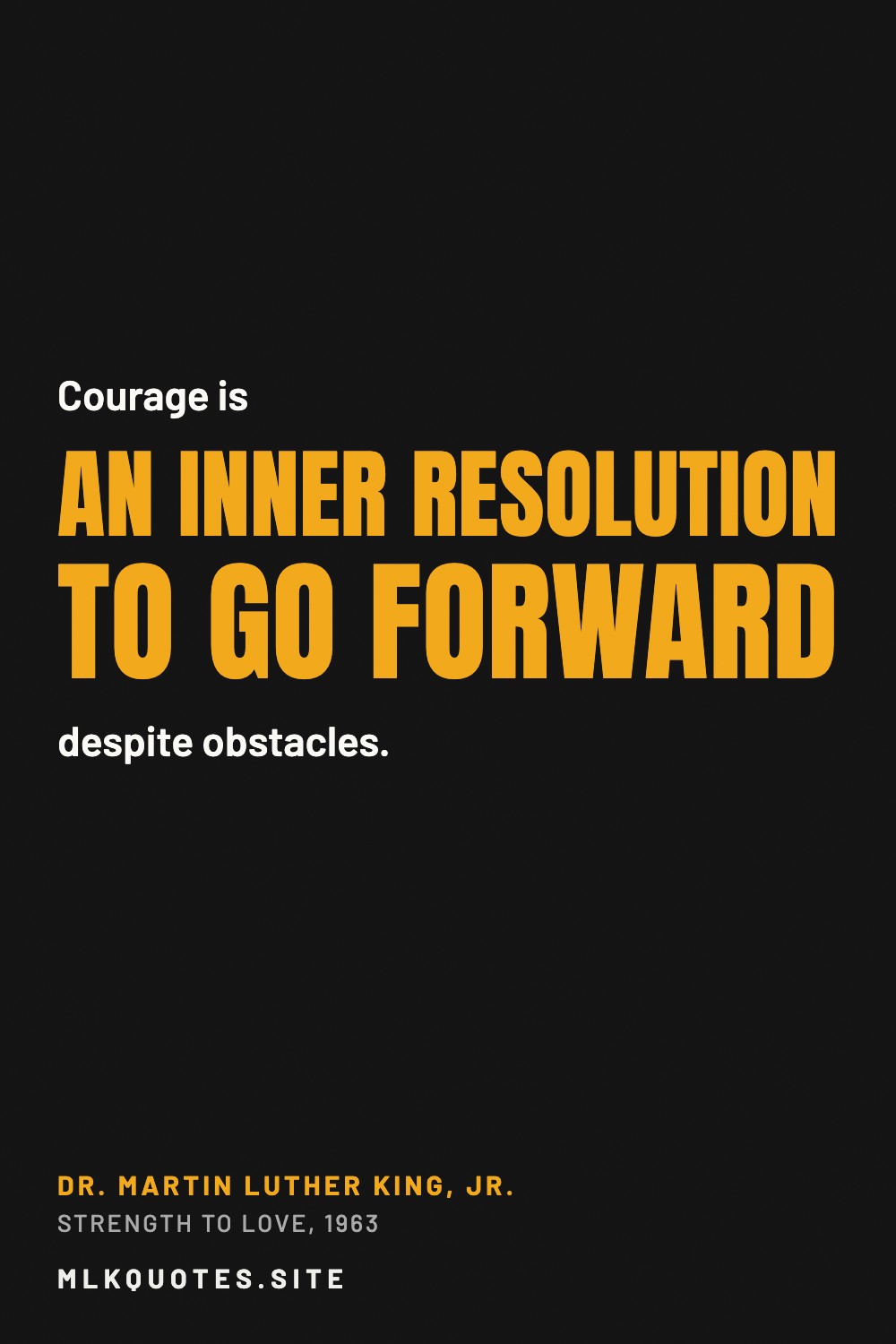
“Courage is an inner resolution to go forward despite obstacles.”
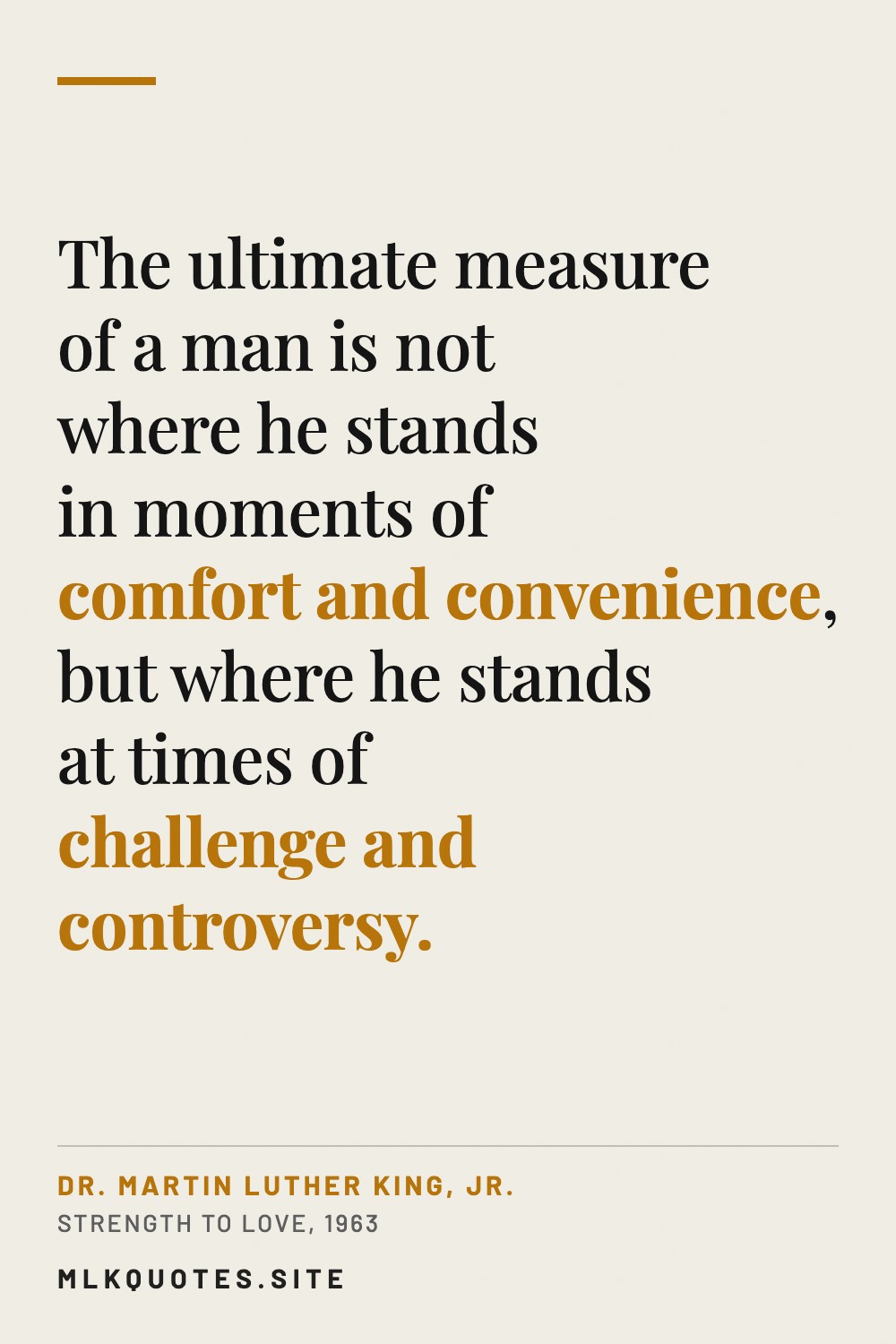
“The ultimate measure of a man is not where he stands in moments of comfort and convenience, but where he stands at times of challenge and controversy.”
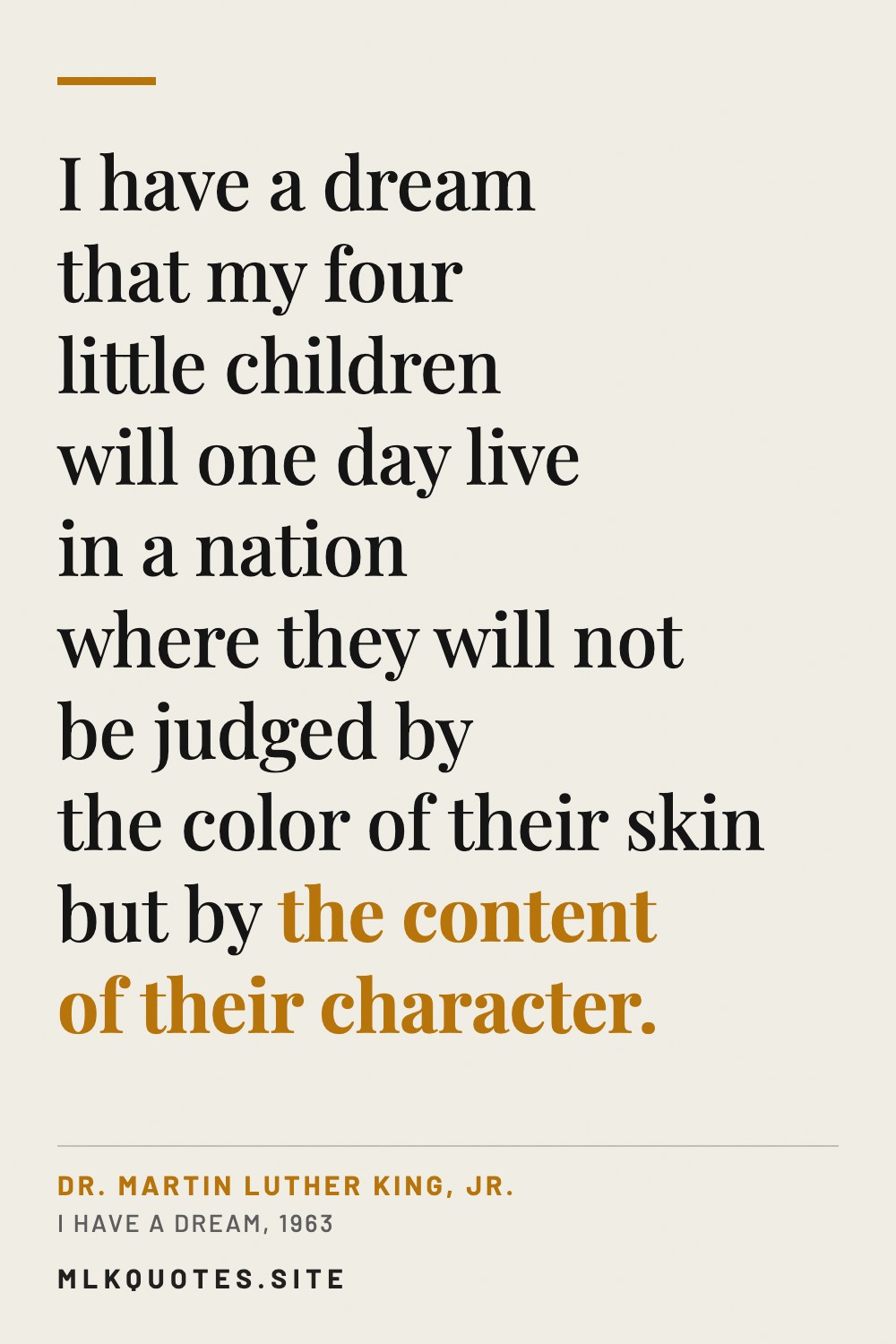
“I have a dream that my four little children will one day live in a nation where they will not be judged by the color of their skin but by the content of their character.”
The hope in King’s speeches is rarely naive. In his Christmas Eve sermon of 1967, broadcast by the CBC as one of his Massey Lectures (King Institute), he listed the moments his dream had turned “into a nightmare.” The first came weeks after the March on Washington, when four girls were murdered in a Birmingham church bombing. Then he ended the sermon: “I still have a dream.”
The night before Memphis
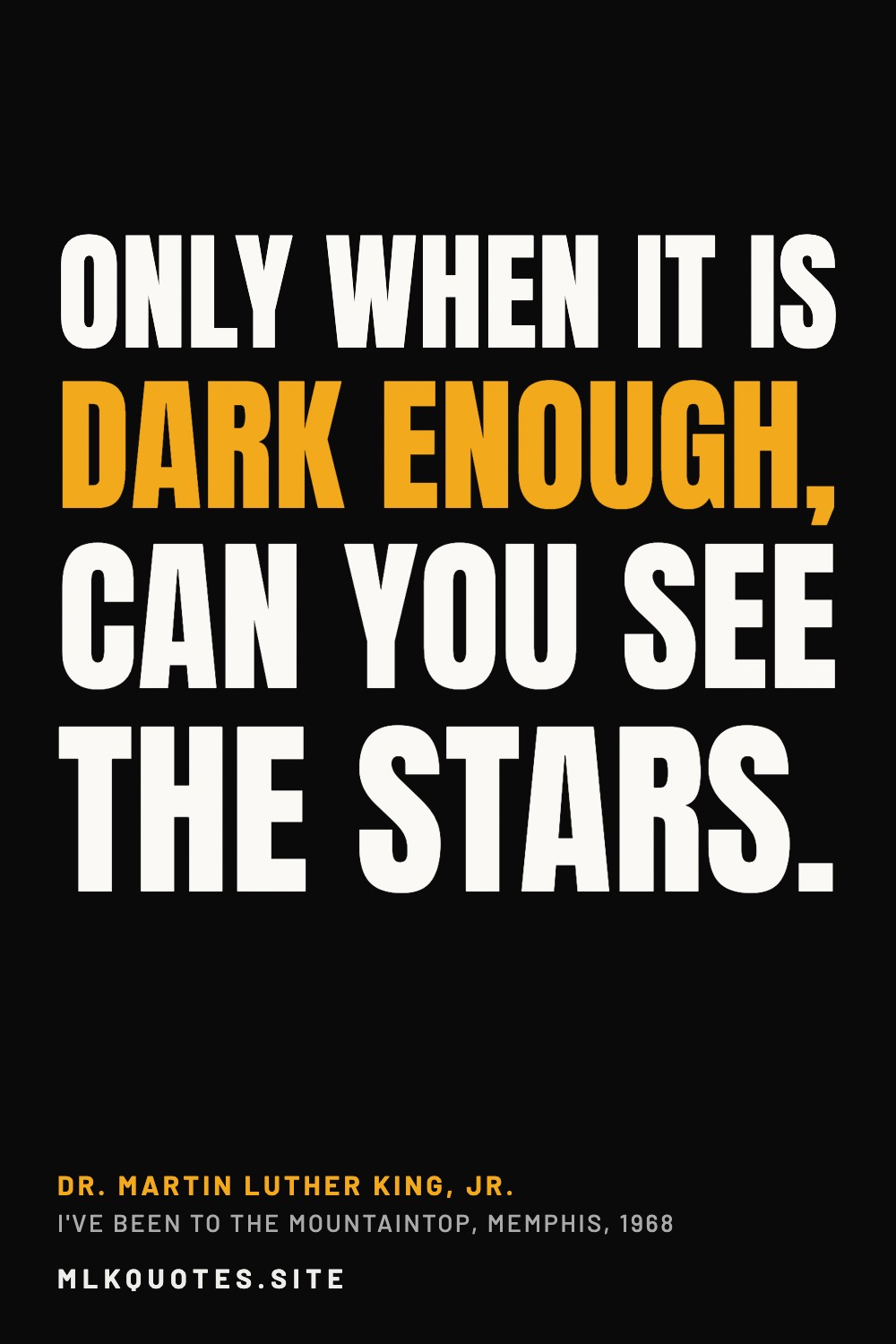
On 3 April 1968 King came to Memphis to support some 1,300 sanitation workers who had been on strike since February (King Institute). Speaking at Mason Temple, he said that the times were troubled, then added: “But I know, somehow, that only when it is dark enough, can you see the stars.” The speech ends with the passage people remember: “I may not get there with you. But I want you to know tonight, that we, as a people, will get to the promised land.” He was killed the following evening.
Quoting these lines correctly
Use “only when it is dark enough, can you see the stars” and date it to 3 April 1968. The popular “Only in the darkness can you see the stars” isn’t what he said.
“A stone of hope” is from “I Have a Dream” (28 August 1963). See I Have a Dream quotes.
Frequently asked questions
What did MLK say about hope?
He treated hope as something you hold on to when the evidence is against you. In A Christmas Sermon on Peace (1967) he admitted that his dream had at times turned “into a nightmare,” then closed by saying “I still have a dream, because, you know, you can’t give up in life.”
Did MLK say “Only in the darkness can you see the stars”?
Not in those words. In “I’ve Been to the Mountaintop” (Memphis, 3 April 1968) he said: “only when it is dark enough, can you see the stars” (AFSCME transcript). The shorter “only in the darkness” version is a paraphrase.
Where did King give his last speech?
At Mason Temple in Memphis, Tennessee, on 3 April 1968, in support of the city’s striking sanitation workers. About 1,300 Black workers had walked off the job that February (King Institute). He was assassinated the next evening.
What does “a stone of hope” mean?
It’s from the end of “I Have a Dream”: “With this faith we will be able to hew out of the mountain of despair a stone of hope.” The Martin Luther King, Jr. Memorial in Washington, D.C. is built around this image: a “Stone of Hope” breaking free from a “Mountain of Despair,” in the National Park Service’s words.
How this page was made: written with AI assistance from the primary sources listed above.Every quotation and fact was checked against those sources by Maddy on 6 October 2026. How we verify · Last updated 6 October 2026