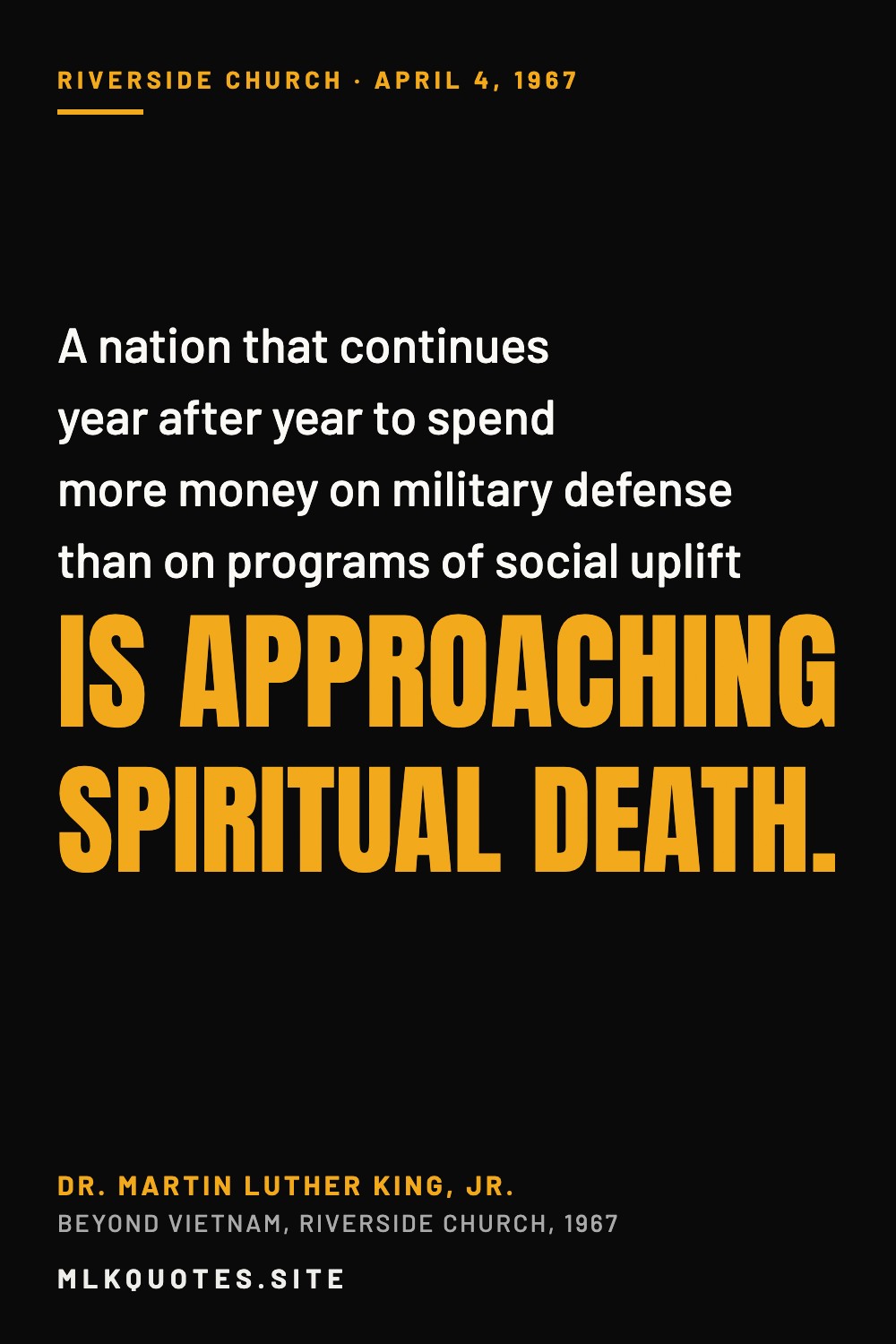
King’s sharpest words on war come from “Beyond Vietnam,” his speech at Riverside Church in New York on 4 April 1967: “A nation that continues year after year to spend more money on military defense than on programs of social uplift is approaching spiritual death.” His case for peace runs back to his 1964 Nobel Peace Prize speeches and forward to his last speech in 1968: “it’s nonviolence or nonexistence.”
M13 quote images · Checked by Maddy · Updated 6 October 2026
Peace & War quotes
Tap an image to open it full size. Use the buttons to save it to Pinterest, share it, or download it.
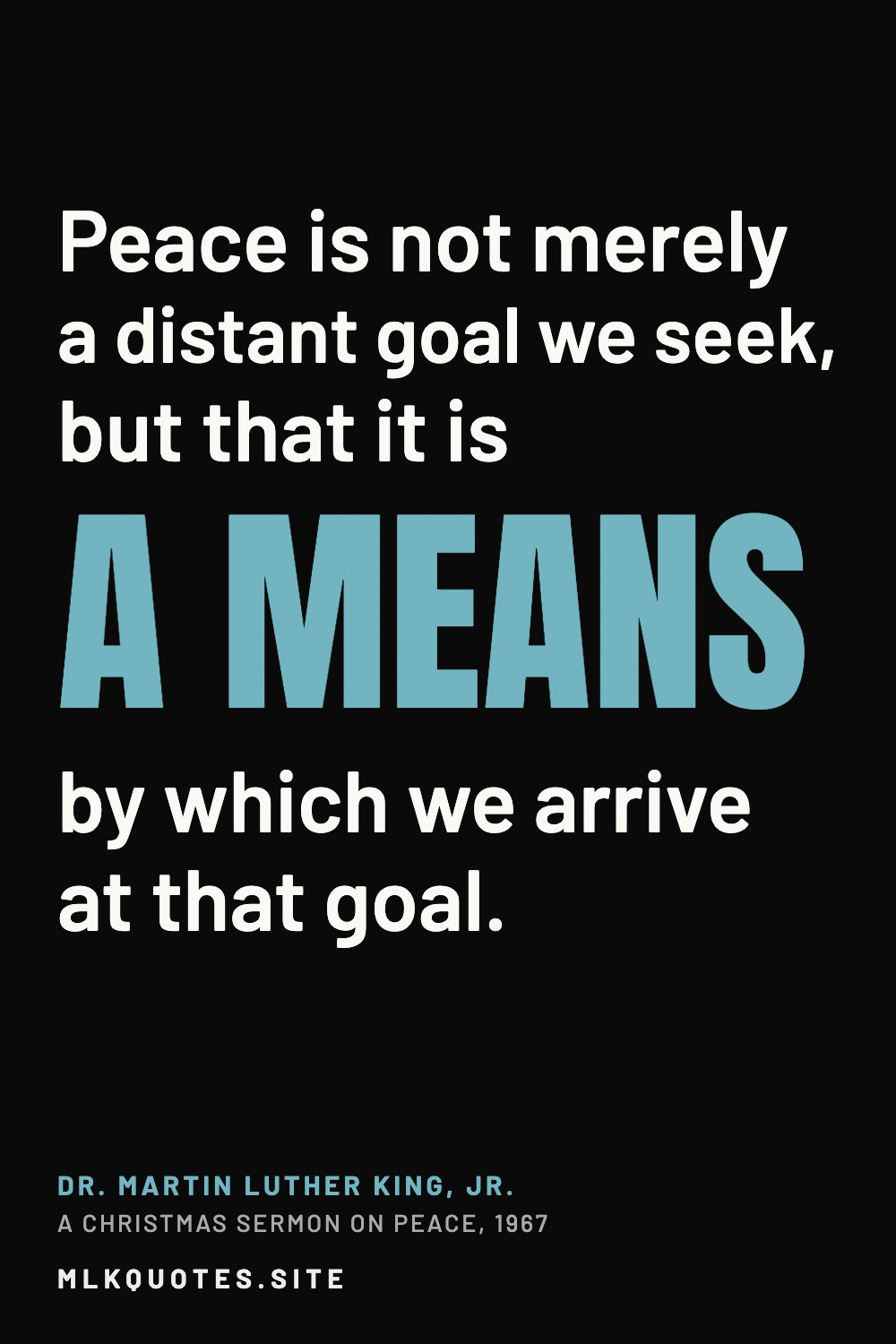
“Peace is not merely a distant goal we seek, but that it is a means by which we arrive at that goal.”
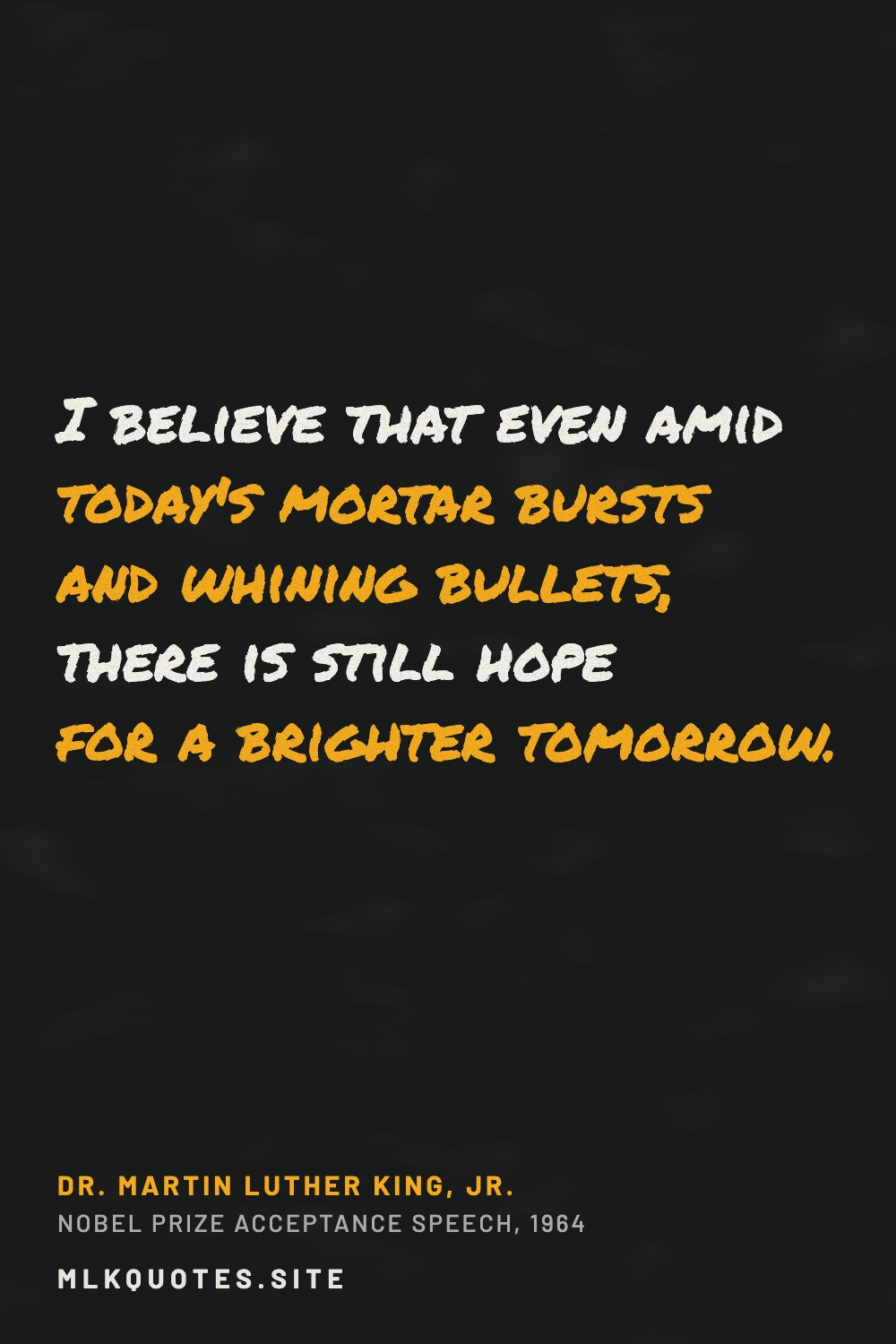
When King accepted the Nobel Peace Prize at the University of Oslo on 10 December 1964, he spoke of “mortar bursts and whining bullets” and of a world that could still choose peace (NobelPrize.org). In his Nobel lecture the next day he made the economic case: the “negative nuclear arms race which no one can win” should become a “peace race” (lecture).
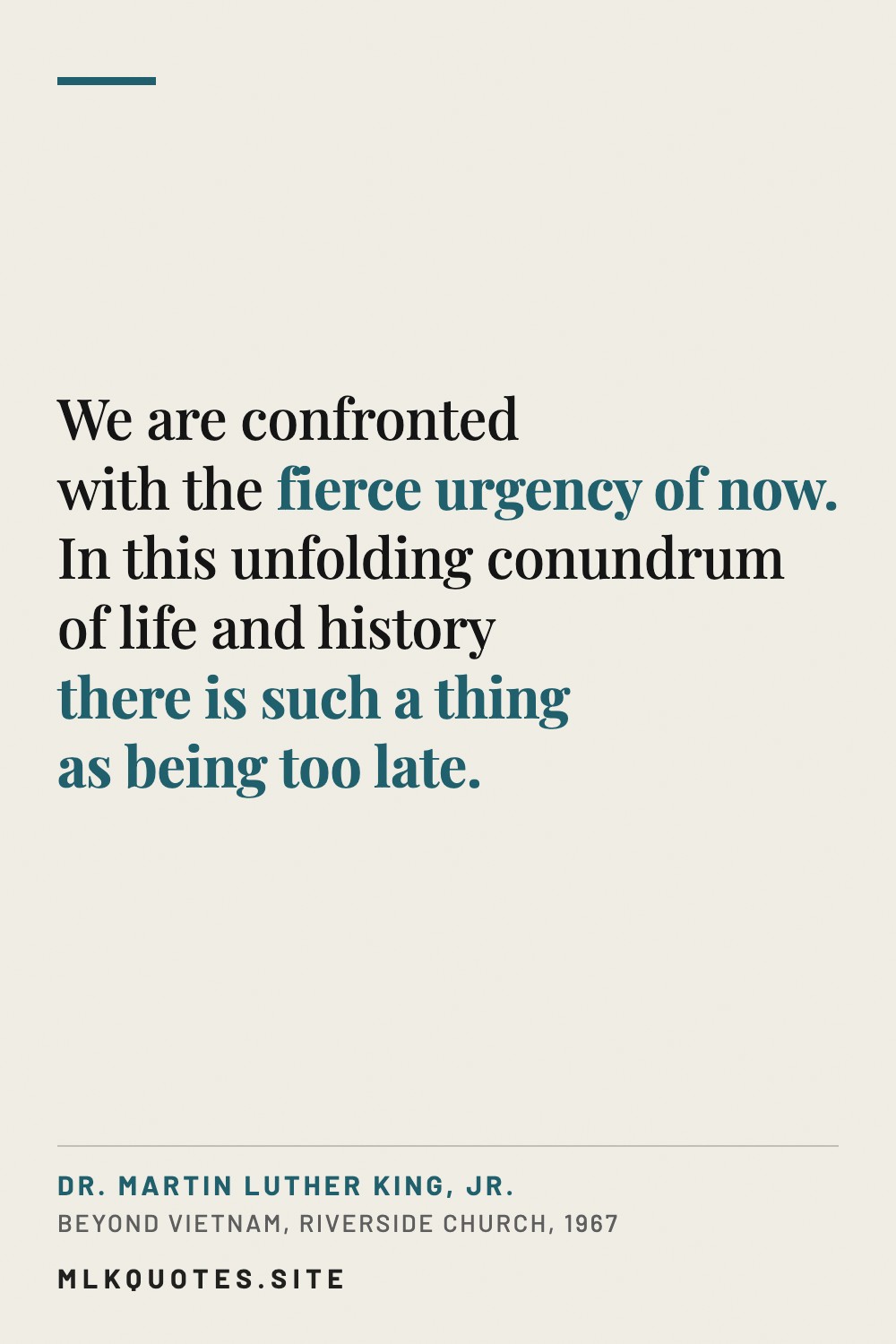
Two and a half years later he took his opposition to the Vietnam War public. On 4 April 1967, at an event organised by Clergy and Laymen Concerned about Vietnam, he spoke to more than 3,000 people at Riverside Church in New York (King Institute). “If America’s soul becomes totally poisoned,” he said, “part of the autopsy must read Vietnam.” It was exactly one year before his death. The reaction was largely negative: both the Washington Post and the New York Times published editorials criticising the speech.
Peace as a means, not only an end
That December, in a Christmas Eve sermon broadcast by the Canadian Broadcasting Corporation, King put the idea in one line: “peace is not merely a distant goal we seek, but that it is a means by which we arrive at that goal. We must pursue peaceful ends through peaceful means” (King Institute). In the same sermon he warned that people “must either learn to live together as brothers or we are all going to perish together as fools.”
Quoting these lines correctly
“A time comes when silence is betrayal” is King quoting Clergy and Laymen Concerned about Vietnam. His own next sentence is “That time has come for us in relation to Vietnam.”
“Peace is not merely a distant goal…” is from the 1967 Christmas sermon, not the 1964 Nobel speech, as some sites claim.
“Nonviolence is the answer to the crucial political and moral question of our time”: the speech says question, singular.
Frequently asked questions
What did Martin Luther King Jr. say about war?
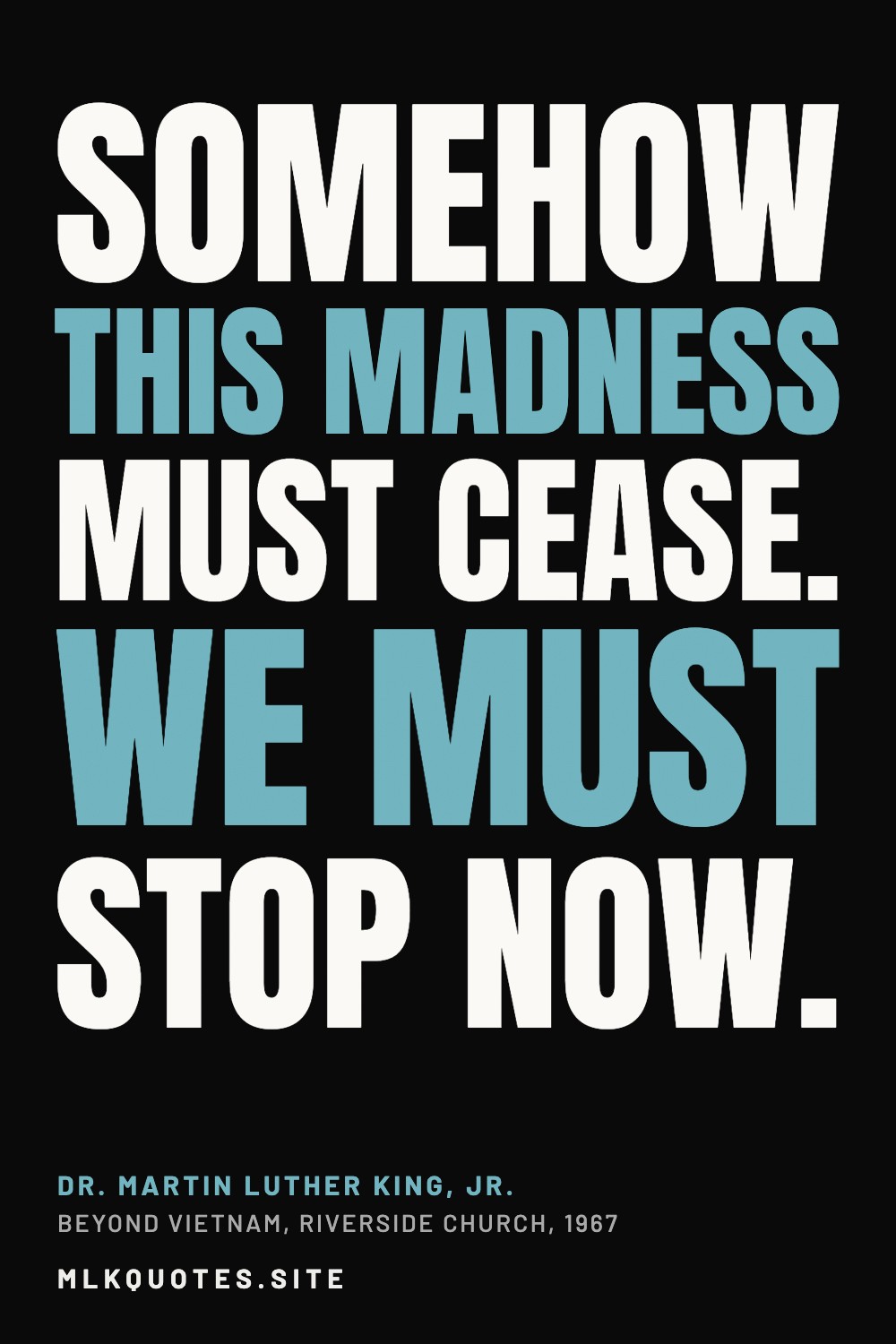
He called the Vietnam War a moral and economic disaster for both countries. In “Beyond Vietnam” (4 April 1967) he said “Somehow this madness must cease. We must stop now,” and warned that a nation spending more on the military than on “programs of social uplift is approaching spiritual death.”
Did MLK say “A time comes when silence is betrayal”?
He said it, but he was quoting. In “Beyond Vietnam” he read the line from a statement by the executive committee of Clergy and Laymen Concerned about Vietnam, the group that organised the event, and then added his own sentence: “That time has come for us in relation to Vietnam” (King Institute; full text).
What did King say in his Nobel Peace Prize speech?
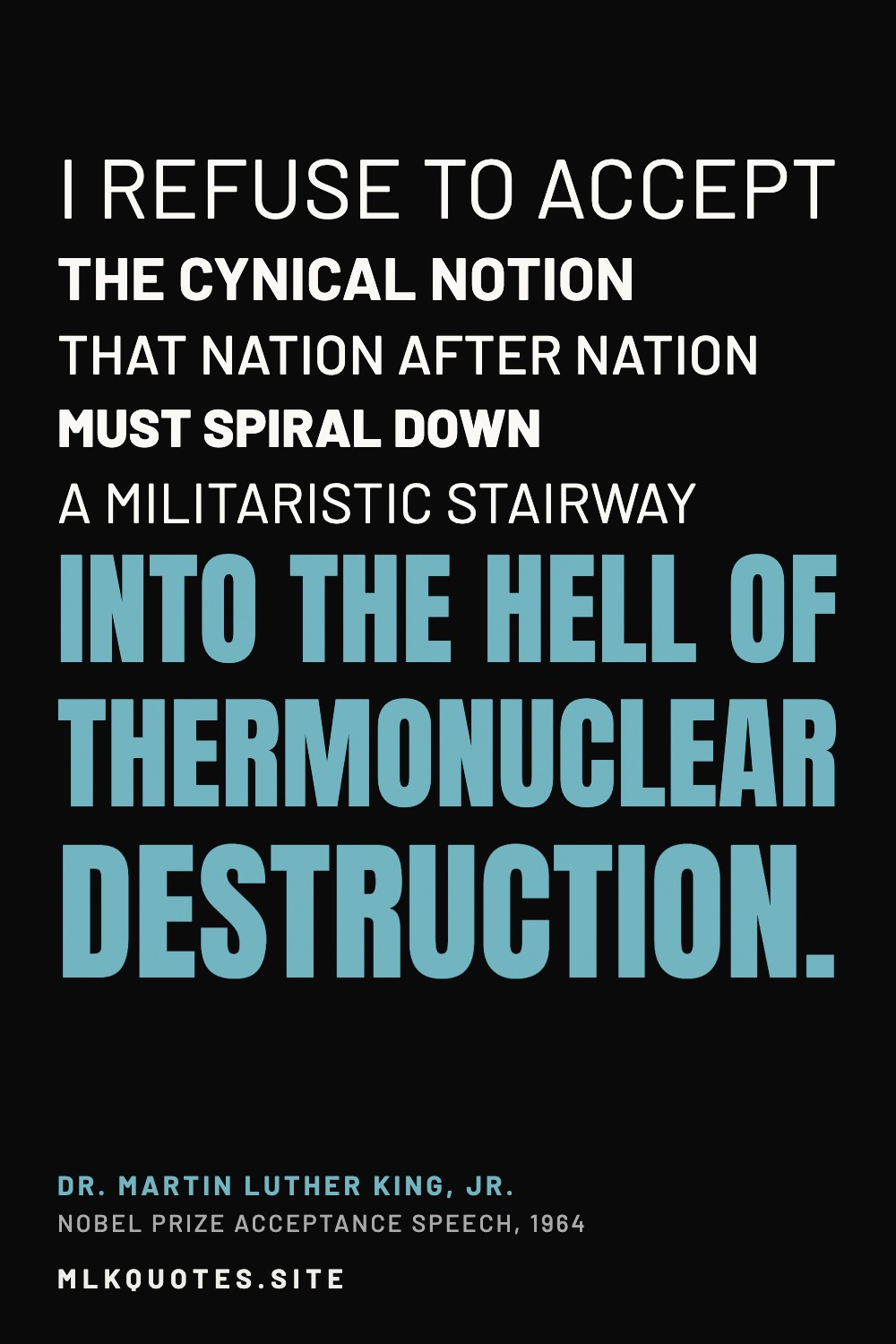
Accepting the prize in Oslo on 10 December 1964, he said nonviolence was “the answer to the crucial political and moral question of our time” and that he refused “the cynical notion that nation after nation must spiral down a militaristic stairway into the hell of thermonuclear destruction” (NobelPrize.org). In his Nobel lecture the next day he called for shifting “the arms race into a ‘peace race’” (lecture text).
Did MLK say “Wars are poor chisels for carving out peaceful tomorrows”?
It is widely attributed to him, but we haven’t yet matched it to a primary text, so it isn’t on this page. We’ll add it once it’s checked. How we verify.
What does “nonviolence or nonexistence” mean?
It’s from his last speech, in Memphis on 3 April 1968: “It is no longer a choice between violence and nonviolence in this world; it’s nonviolence or nonexistence” (transcript). In an age of nuclear weapons, he argued, refusing nonviolence meant risking human survival.
How this page was made: written with AI assistance from the primary sources listed above.Every quotation and fact was checked against those sources by Maddy on 6 October 2026. How we verify · Last updated 6 October 2026