King gave the “I Have a Dream” speech on 28 August 1963, near the end of the March on Washington for Jobs and Freedom, to a crowd of more than 200,000 at the Lincoln Memorial and a live television audience. Its most-quoted line is: “I have a dream that my four little children will one day live in a nation where they will not be judged by the color of their skin but by the content of their character.”
M8 quote images · Checked by Maddy · Updated 6 October 2026
I Have a Dream quotes
Tap an image to open it full size. Use the buttons to save it to Pinterest, share it, or download it.
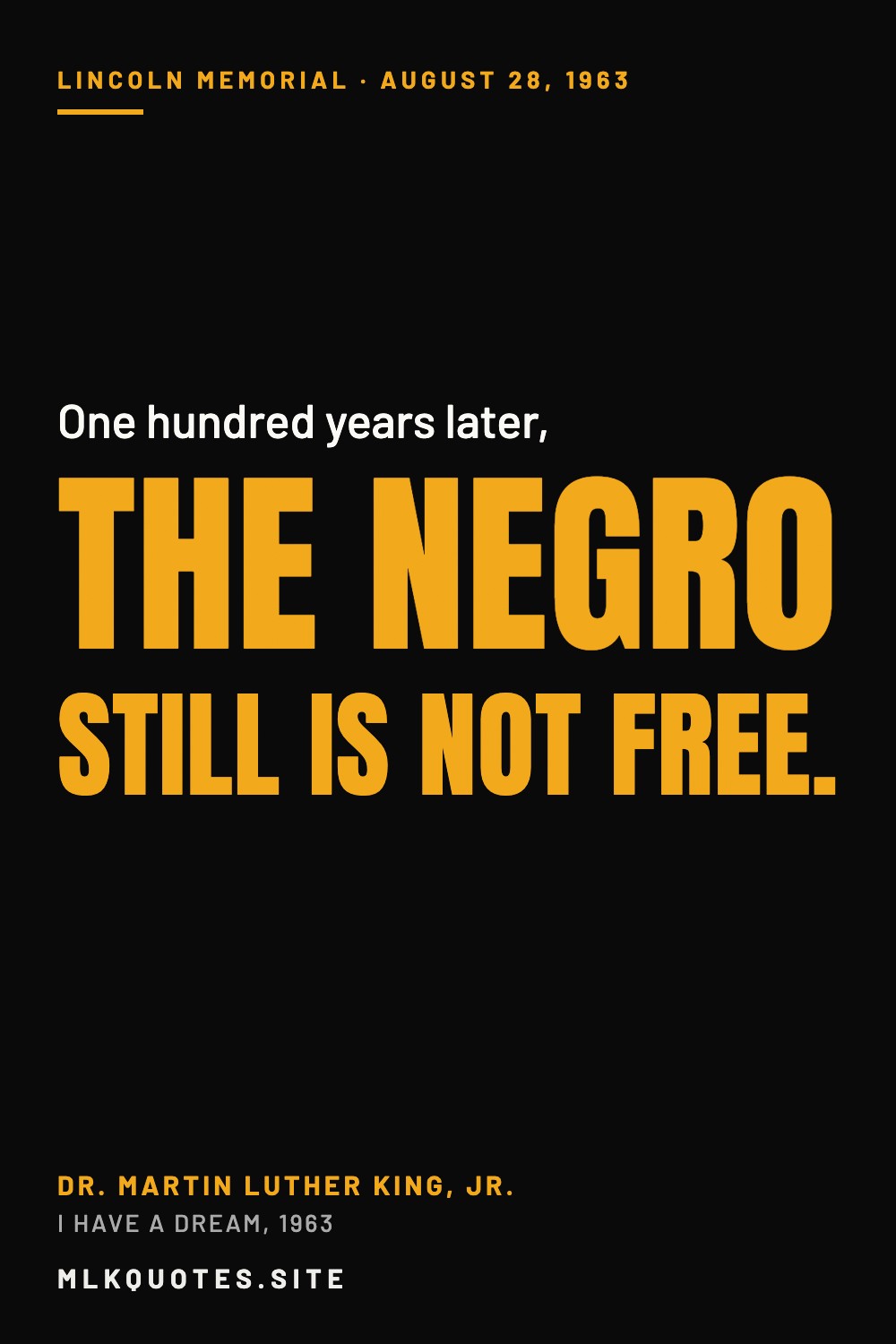
“One hundred years later, the Negro still is not free.”
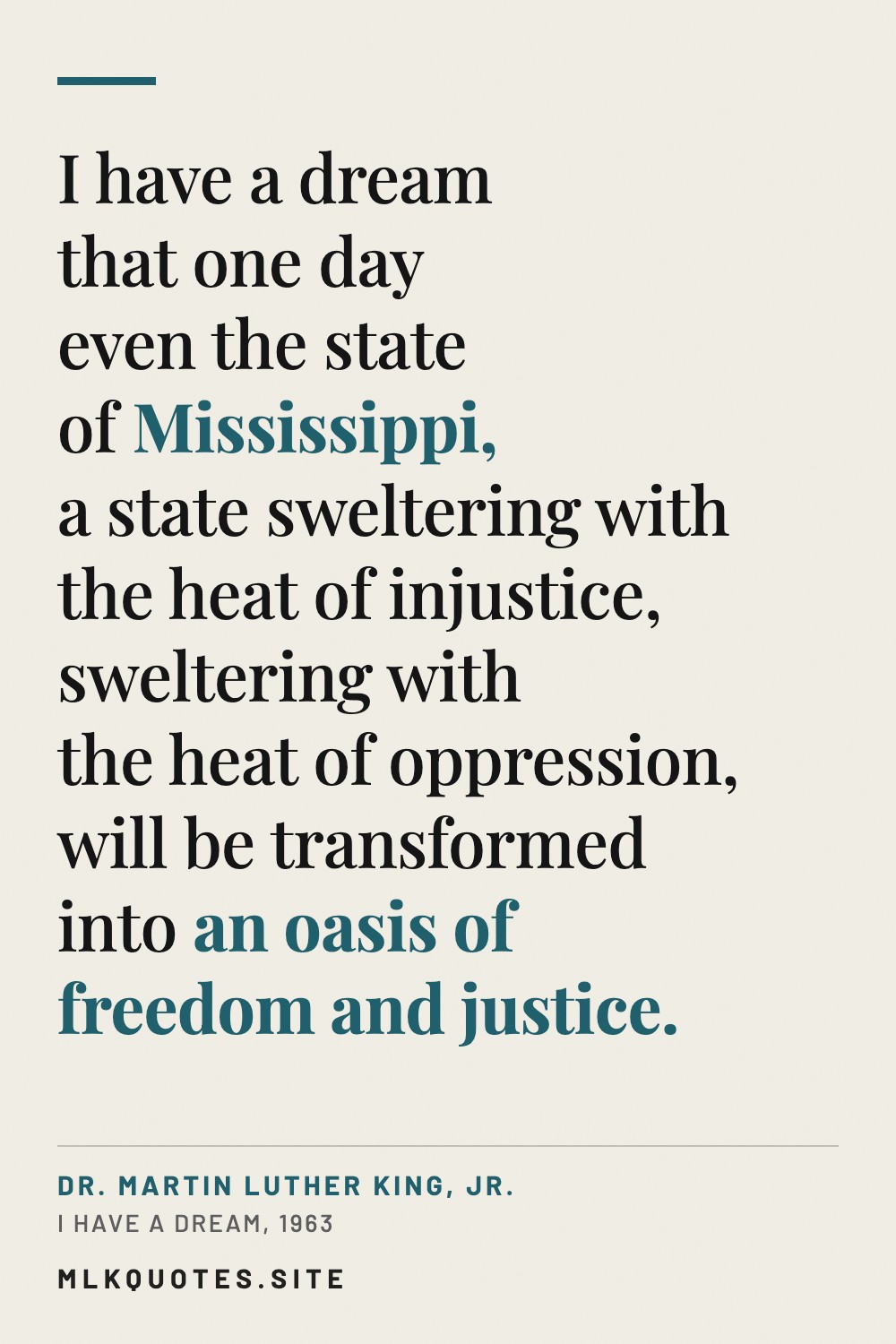
“I have a dream that one day even the state of Mississippi, a state sweltering with the heat of injustice, sweltering with the heat of oppression, will be transformed into an oasis of freedom and justice.”
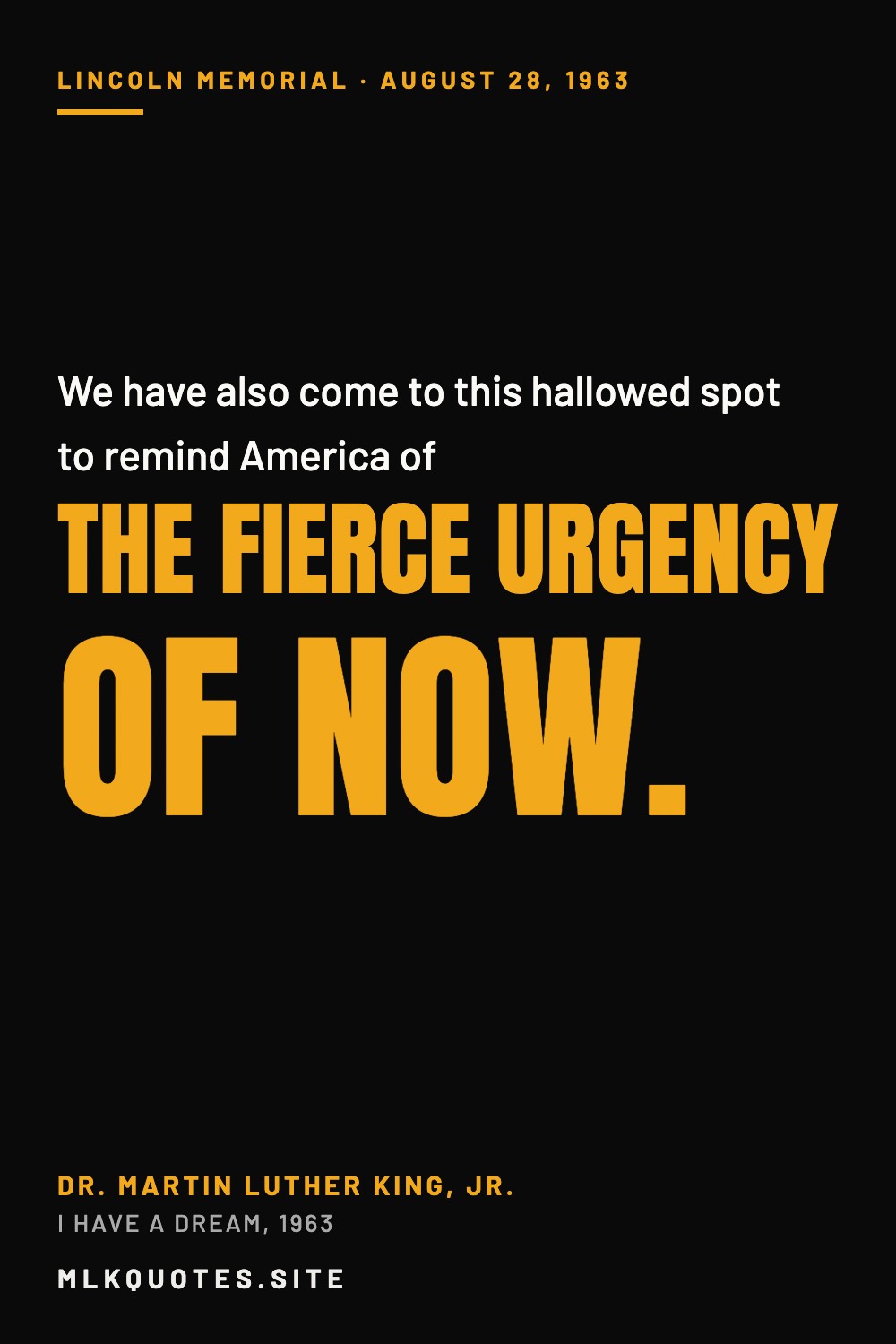
The March on Washington for Jobs and Freedom drew more than 200,000 people to the capital on 28 August 1963, and it pressed the Kennedy administration to back a strong federal civil rights bill (King Institute). King spoke near the end of a long programme. The King Institute describes him moving both the crowd at the Lincoln Memorial and the live television audience.
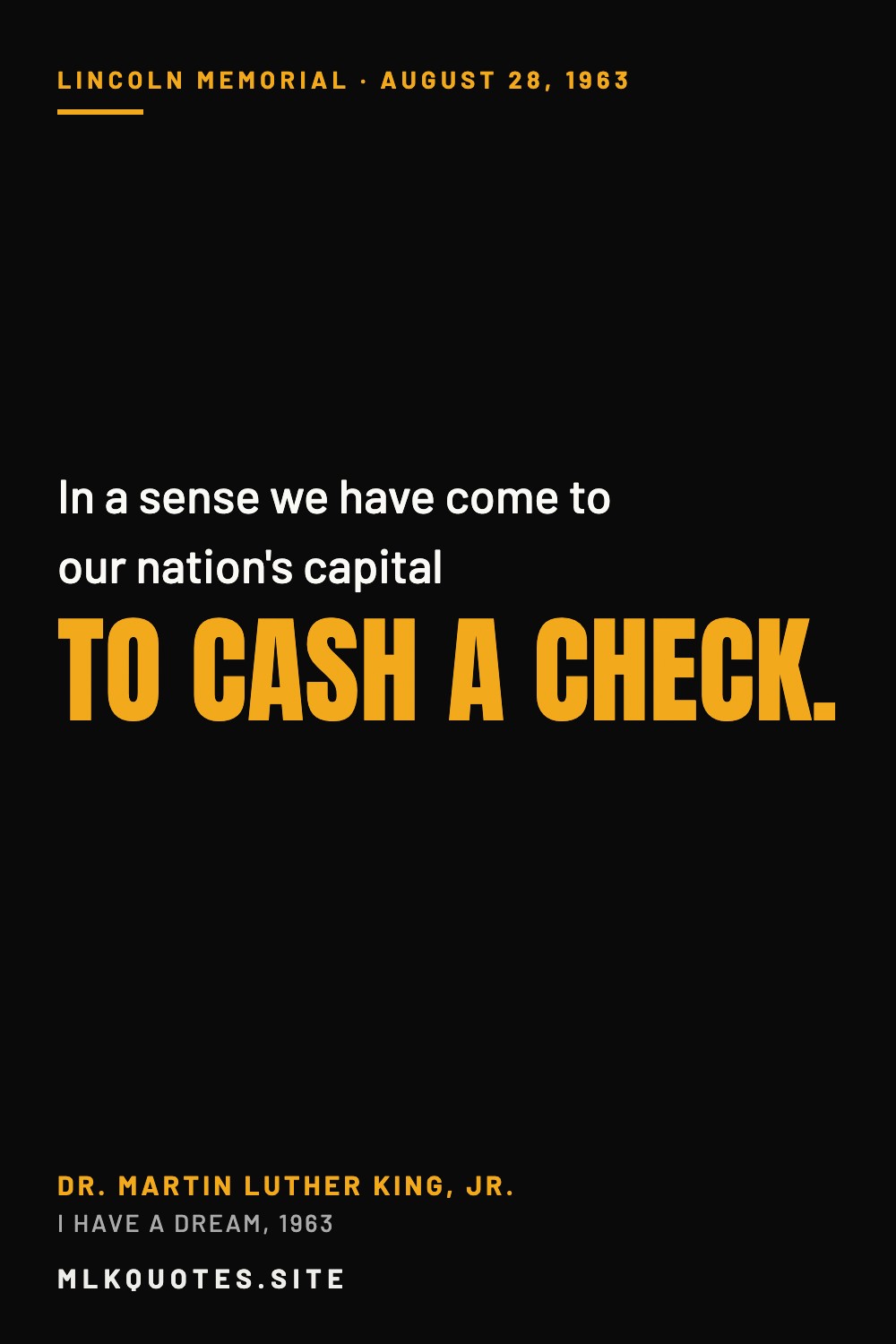
The speech opens with a debt, not a dream. A century after emancipation, “the Negro still is not free,” and the marchers have come “to cash a check” that America wrote in its founding documents. The dream passages come in the second half.
Why only excerpts here
About a month after delivering it, King applied to register the speech for copyright, and the certificate was issued on 2 October 1963. In 1999 the Eleventh Circuit Court of Appeals ruled that performing it in public hadn’t given that copyright away (Justia). The King estate still controls the full text. Short quotations with commentary, like the ones on this page, are the usual way to write about it.
Quoting these lines correctly
In the transcripts we checked, the line reads “the Negro still is not free,” not “is still not free.”
On 28 August 1963 in Washington, D.C., at the Lincoln Memorial, as the closing high point of the March on Washington for Jobs and Freedom. More than 200,000 people took part in the march (King Institute).
What is the most famous line of the I Have a Dream speech?
“I have a dream that my four little children will one day live in a nation where they will not be judged by the color of their skin but by the content of their character.”
Is the I Have a Dream speech copyrighted?
Yes. King registered the copyright in October 1963, and in 1999 a federal appeals court ruled that delivering the speech in public hadn’t placed it in the public domain (Estate of Martin Luther King, Jr., Inc. v. CBS, Inc., 11th Cir. 1999). That’s why this page uses short excerpts with commentary rather than the full text.
Did King stop believing in the dream?
No, but he admitted it had been tested. In his Christmas Eve sermon of 1967 he said that “not long after talking about that dream I started seeing it turn into a nightmare,” beginning with the murder of four girls in a Birmingham church weeks later. He closed that sermon with “I still have a dream” (King Institute).
How this page was made: written with AI assistance from the primary sources listed above.Every quotation and fact was checked against those sources by Maddy on 6 October 2026. How we verify · Last updated 6 October 2026